Environmental Care in Anthropo(s)cenic Landscapes: Voices and Practices from Albania and Serbia
-
Original Title
Skrb za okolje v antropoceničnih krajinah: Glasovi in prakse iz Albanije in Srbije
Project Team
Maja Petrović-Šteger, PhD, Borut Telban, PhD, Ana Jelnikar, PhD, Urša Kanjir, PhD-
ARIS Project ID
J6-60102
-
Duration
1 January 2025–31 December 2027 -
Link to SICRIS
22747 -
Lead Partner
-
Project Leader
-
Financial Source
Slovenian Research and Innovation Agency

What do biodiversity habitats and sacred landscapes have in common, and how are they changing amid the accelerating climate and environmental challenges of the Anthropocene? How do people living in or near these places perceive and experience the current transformations, and how do they imagine their future? The core aim of this project is to explore the emotional and spiritual relationships, knowledge practices, and care that people grow and maintain in relation to the biocultural habitats in Albania and Serbia.
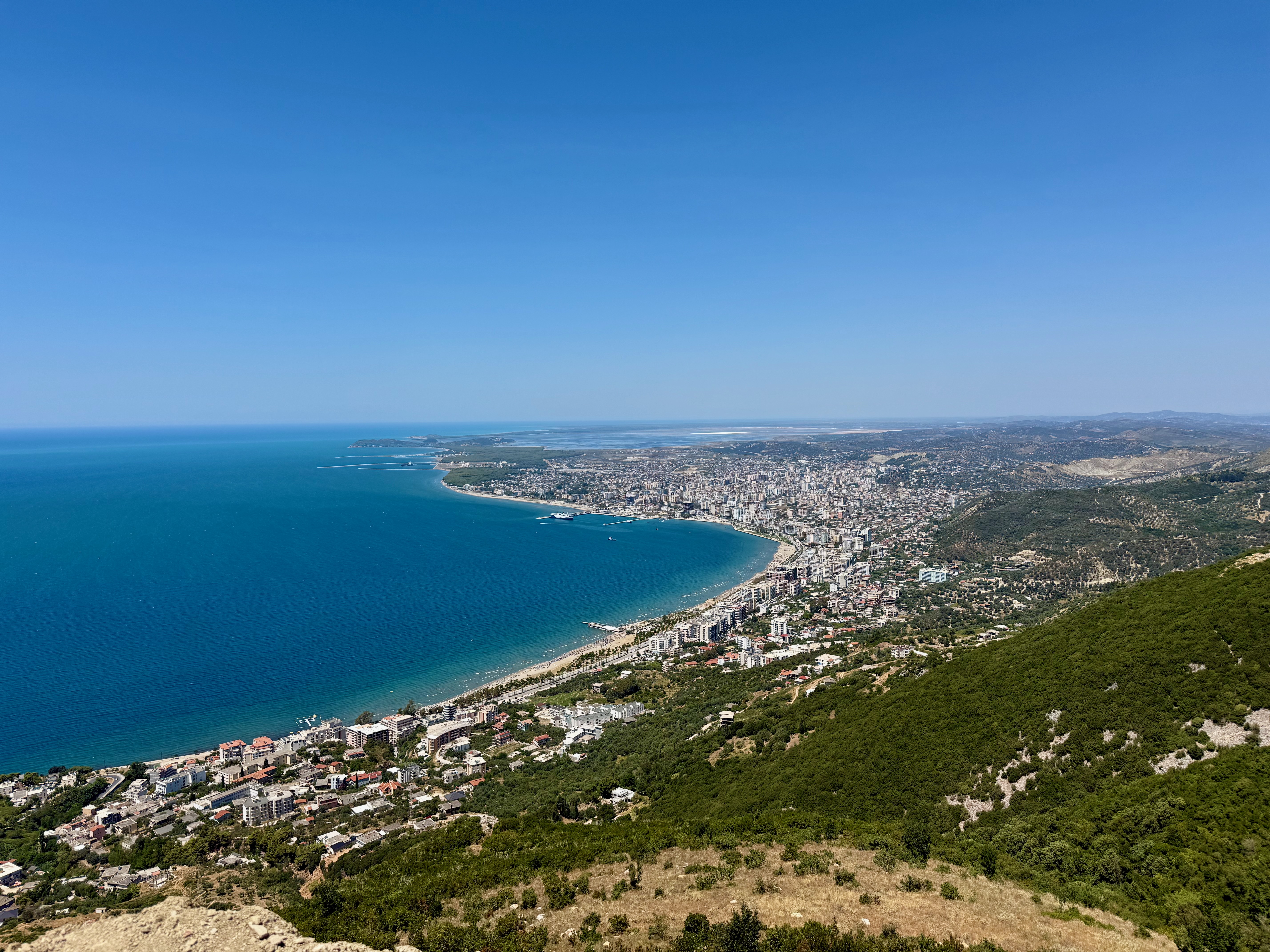
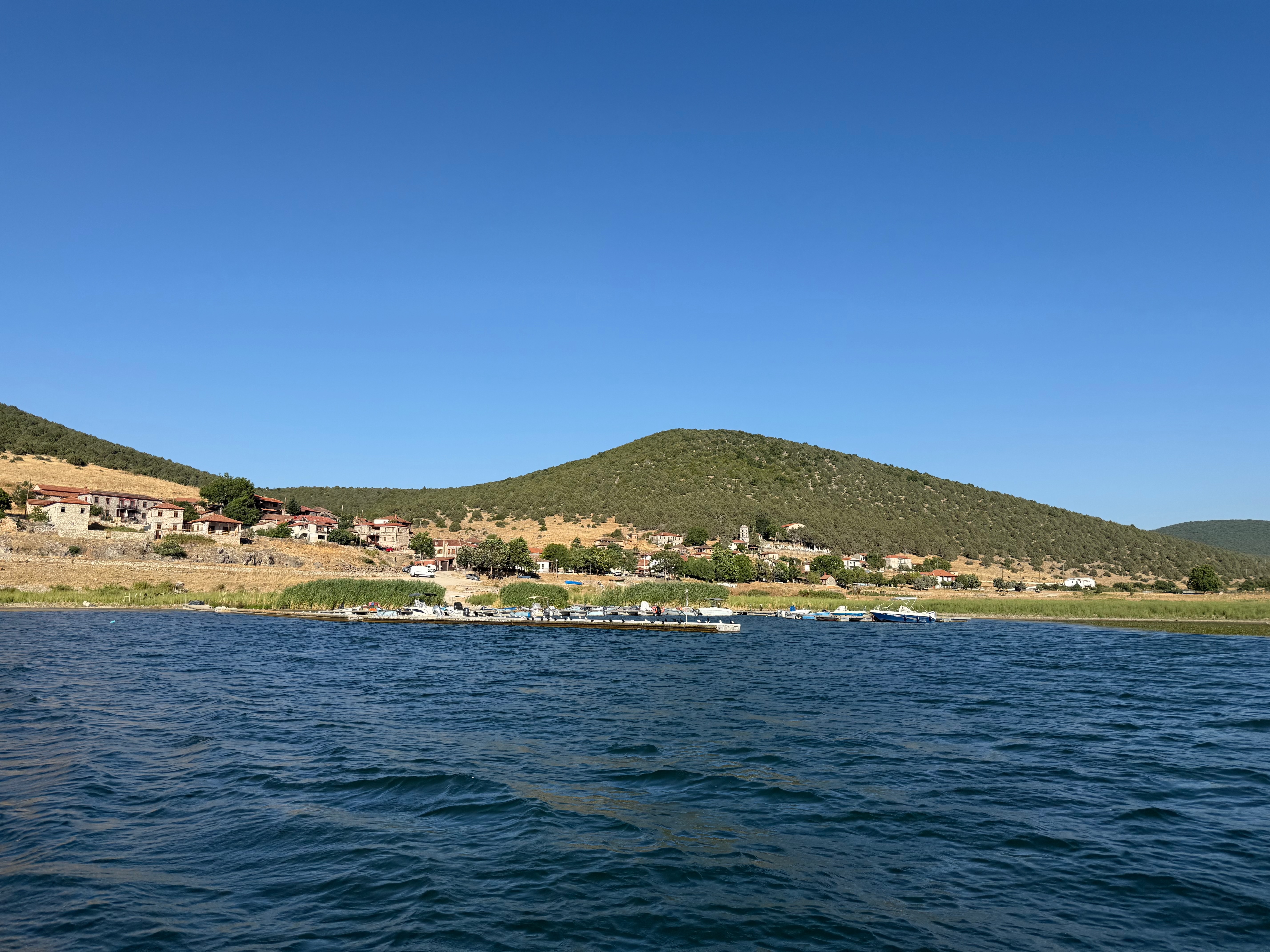
The political shift towards a neoliberal market economy after 1990 has triggered extensive urbanisation, development of tourism, infrastructural interventions, deforestation and other extractive activities that threaten protected habitats such as the Vjosa-Narta wetlands, the Prespa lakes, the Gornje Podunavlje/Upper Danube wetlands and the forests of the Fruška gora/Frankish Mountains. These sparsely populated areas, recognised as holy landscapes, embody spiritual connections for the locals through holy springs and other sites such as churches, monasteries and other tangible and intangible relics. Despite their “scenic” reputation, these habitats have changed over time forming what are known as Anthroposcene environments. This comparative anthropological research aims to address the existing gap in understanding the perceptions, experiences and imaginaries of protected habitats in Southeast Europe, a region whose voices are relatively less represented in discussions of today's climate and environmental challenges. As most of these habitats, with the exception of Frankish Mountains, are part of wetlands, they form transitional landscapes where the boundary between terrestrial and water areas is constantly shifting and habitats have been subject to continuous change over centuries. However, in recent decades, these changes are becoming increasingly abrupt and are leading to unprecedented transformations. To cope with the consequences, some policy and administrative institutions are trying to apply legal and economic regulations, such as Ecosystem Services (ES). The latter aim to create sustainable policies in the various ecosystems that are vital to human life. The project team posits that ES, in their attempt to impose one model and one solution for everything, can hardly take into account and perceive the plurality of worlds and practices of responsibility and care towards the environments. This research starts from the simple but important premise that sustainability and care for the environments do not come from politics and certainly not from economic systems, but from people themselves. To delve into the complex worlds on the ground, this research will employ the intersectional approach that combines thick, ethnographic and big, remote sensing data. In this way, a comprehensive understanding of the multitude of entanglements between the geophysical, historical, political, economic and social realms of respective environments will be gained. This will enable the research team to assess the implementation of ES in Albania and Serbia and to advocate for an inclusive understanding of the environment and people’s responsibility for it. The research aims to shed light on the “realities on the ground” and to document and analyse local experiences in order to empower communities. It aims to co- create a knowledge base for a comprehensive understanding of environmental care.
JOURNAL ARTICLES AND CHAPTERS IN BOOKS
- GREGORIČ BON, Nataša, KANJIR, Urška, STANČIČ, Liza. Intersecting big and thick data: approaching landscape changes in rural Vjosa River Valley, Albania. Social sciences & humanities open. 2025, vol. 12, [article no.] 102012, 16 str., ilustr., graf. prikazi, zvd. ISSN 2590-2911. https://www.sciencedirect.com/science/article/pii/S2590291125007405?lid=jua9g5tkojjo, DOI: 10.1016/j.ssaho.2025.102012. [COBISS.SI-ID 256451843]
CONFERENCE PAPERS
- GREGORIČ BON, Nataša. Ecologies of care in anthroposcenic environments. V: 2025 American Anthropological Association (AAA) Annual Meeting: Ghosts : New Orleans, LA November 19th-23rd, 2025. [S. l.: s. n.], 2025. Str. 1750. https://annualmeeting.americananthro.org/wp-content/uploads/2025/11/aaa-2025-annual-meeting-ghosts-full-program.pdf. [COBISS.SI-ID 260276483]
- PETROVIĆ-ŠTEGER, Maja. Housing the dead: an anthropological reading of middens and processes of self-, community-, and political sedimentation. V: HAMER, Petra (ur.). The Difficult heritage of mass graves : experiences and comparisons : international interdisciplinary symposium within Year of heritage and DEAGENCY project, Department of ethnology and cultural anthropology, Faculty of arts, University of Ljubljana, Thursday, 23. Srptember 2025. [Ljubljana: Department of Ethnology and Cultural Anthropology, Faculty of Arts, University of Ljubljana], 2025?. Str. 6. https://etnologija.ff.uni-lj.si/sites/default/files/documents/Program_Boa_Difficult%20Heritage%20of%20Mass%20Graves.pdf. [COBISS.SI-ID 259222531]
- TELBAN, Borut. The moon, the sun, and the menstruating woman: visibility and vulnerability in Papua New Guinea. Predavanje na European Society for Oceanists Conference 2025 "Connections within and Beyond Oceania", University of Lucerne, Švica (CHE), 25. junij 2025. [COBISS.SI-ID 242350851]
- TELBAN, Borut. Umiranje proti rojstvu na Papui Novi Gvineji. Predavanje v okviru projekta ERC DEAGENCY no. 101095729 - "The Roles of the Agency of the Dead in the Lives of Individuals in Contemporary Society", Odd. za etnologijo in kulturno antropologijo Filozofske fakultete, Ljubljana (SLO), 19. maja 2025. [COBISS.SI-ID 242350083]
ORGANISATION OF PANELS, WORKSHOPS AND SEMINARS
- GREGORIČ BON, Nataša, MUSARAJ, Smoki. 2025. Haunting environments in and beyond the Mediterranean: Restoring human and more-than-human relationalities. V: 2025 American Anthropological Association (AAA) Annual Meeting: Ghosts: New Orleans, LA November 19th-23rd, 2025. [S. l.: s. n.], 2025. Str. 1750. https://annualmeeting.americananthro.org/wp-content/uploads/2025/11/aaa-2025-annual-meeting-ghosts-full-program.pdf. [COBISS.SI-ID 260276483]
INVITED LECTURES
- GREGORIČ BON, Nataša. 2025. Environmental anthropology: living with riverine environments: predavanje prek ZOOM povezave v okviru CMDR Webinar Series "Trends in Anthropology", Centre for Multi-Disciplinary Development Research, Dharwad (IND), 6. mar. [COBISS.SI-ID 232384771]
- GREGORIČ BON, Nataša. Skrb za okolje v rečnih krajinah: primer reke Vjose v Albaniji : predavanje študentom etnologije in kulturne antropologije pri predmetu Etnologije Balkana, Oddelek za etnologijo in kulturno antropologijo, Filozofska fakulteta, Ljubljana, 12. jan. 2026. [COBISS.SI-ID 266188547]
- JELNIKAR, Ana. Healing presence in a wounded world: Medical Mission Sisters and their contribution to the global humanitarian sector : predavanje na dogodku "100 Years of Healing Presence Around the World", River Room at the House of Lords, London (GBR), 9. sep. 2025. [COBISS.SI-ID 250717187]